
Lamesa Kitchen
May 17, 2026
“Transforming the rustic potato into a mahogany, glistening jewel. Outer structural firmness, inner pillowy warmth.”
The Soul: The Sweet Starch
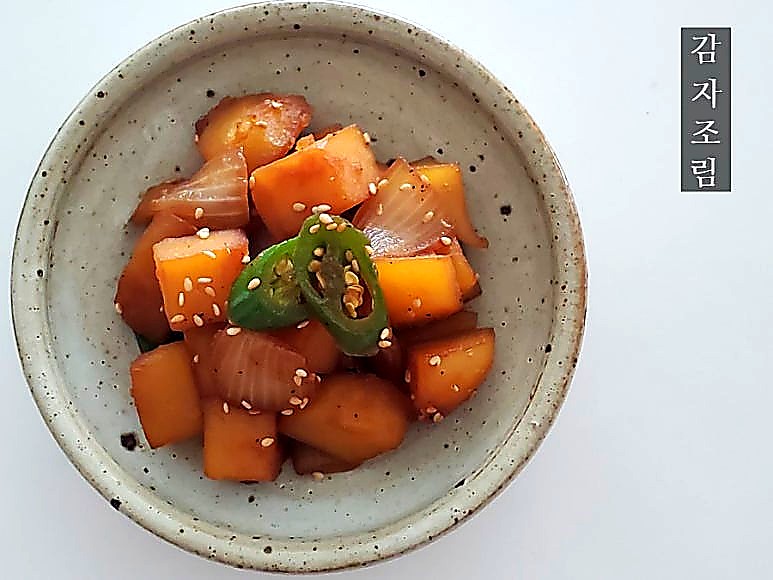
“Gamja Jorim is a beloved ‘Banchan’ (side dish) that represents the comforting warmth of Korean home cooking. It turns the humble potato into a glossy, caramelized jewel. Simmered in a balanced glaze of soy sauce, sweet mirin, garlic, and rice syrup, the potatoes slowly release their natural starches, naturally thickening the braising liquid into a deep, savory lacquer that hugs every single tender, pillowy chunk.”
Often taken for granted as a daily default banchan, a truly perfect plate of braised potatoes is a work of art. The gloss should be glass-like, catching the light elegantly, while the texture stays firm on the outside yet creamy at the center.
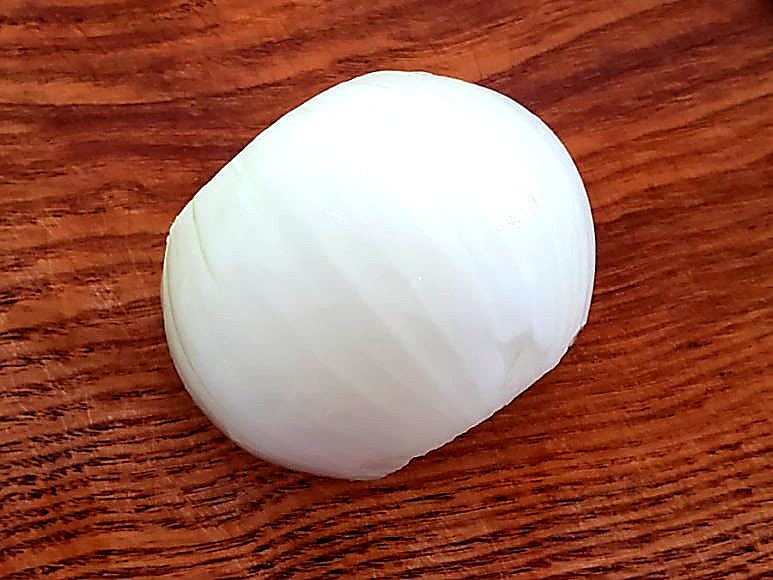
Process 01: Uniform Cubing - Peeling and cutting fresh potatoes into equal 2cm cubes to ensure uniform cooking.
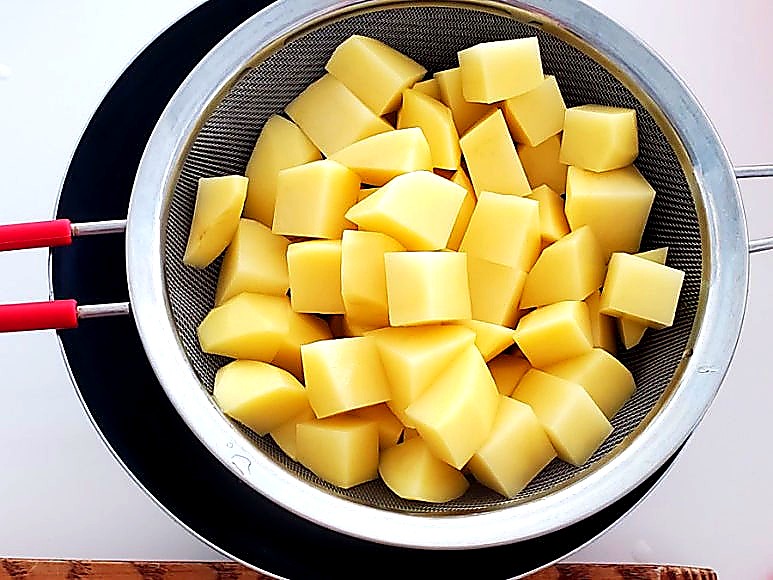
Process 02: Starch Soaking - Soaking the cubed potatoes in cold water for 10 minutes to wash away excess surface starch.
Cultural Heritage: Mitbanchan Nostalgia
“Potatoes (gamja) were historically cultivated in mountain regions during times of food scarcity. In modern Korean homes, Gamja Jorim is a deeply nostalgic ‘Mitbanchan’—a reliable, everyday side dish that grandmothers prepare in large batches to fill the refrigerator. It represents the quiet, unassuming comfort of a home-cooked meal, making even the simplest bowl of rice feel complete.”
During the mid-20th century, potatoes became a crucial security food in the northern and eastern provinces. Combining them with soy sauce created a highly satisfying savory dish that did not spoil quickly. It remains one of the first banchan recipes taught by mothers to their children.
Process 03: Initial Sauté - Pan-frying the soaked and drained potatoes with oil for 3 minutes to build a thin protective skin.
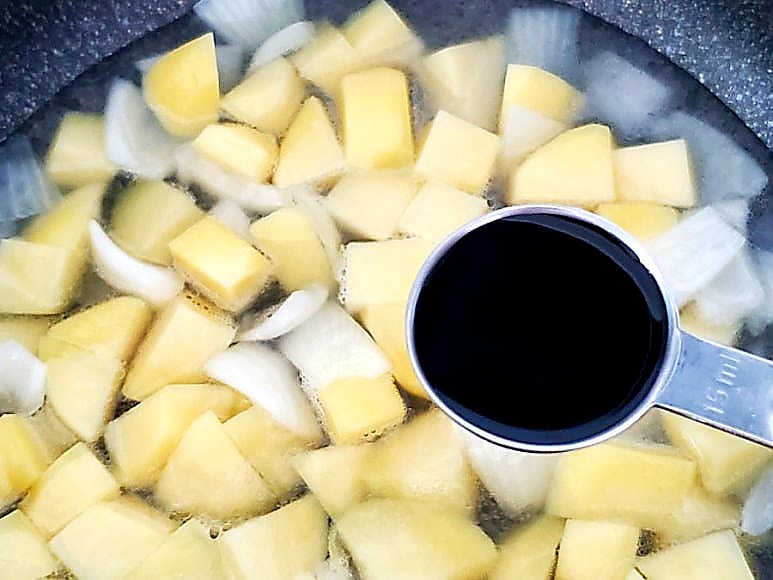
Process 04: Simmering Glaze - Adding the soy sauce, water, mirin, and garlic mixture, bringing it to a boil over medium heat.
Science of Taste: Starch Retrogradation & Osmotic Coating
“The secret to the perfect texture lies in ‘Starch Retrogradation’. Potatoes are loaded with starch. Simply boiling them makes them break apart and turn mushy. By pre-soaking the cut potatoes in cold water to remove excess surface starch, and then adding rice syrup (mulyeot) directly into the soy glaze, we coat the exterior. The high sugar concentration draws out water, firming up the edges through sugar crystallization, ensuring the potato chunks remain perfectly intact while the inside turns incredibly pillowy and soft.”
Pan-frying the potatoes initially creates a retrograded starch crust. When we add the high-viscosity rice syrup in the final minutes, it acts as a sealant. This hydrophobic outer jacket traps moisture inside, steaming the core while preserving the beautiful blocky shape.
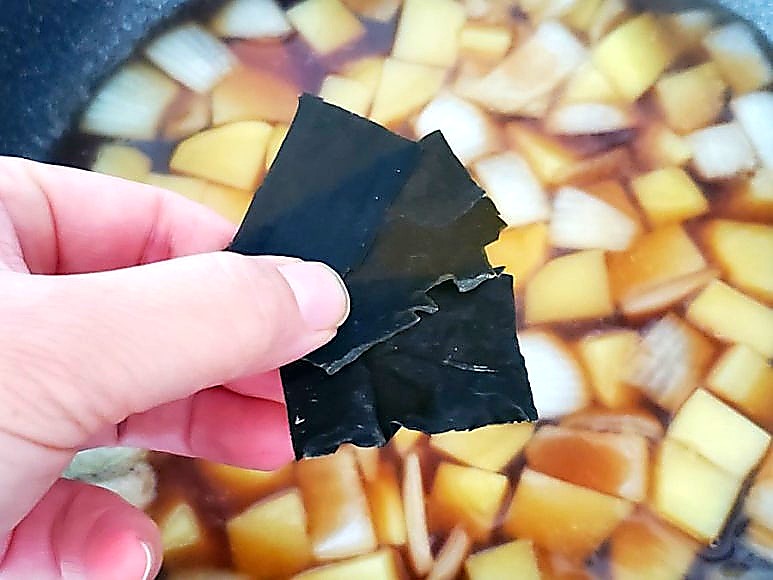
Process 05: The Sweet Lacquer - Drizzling rice syrup during the final minutes to thicken the sauce and add a brilliant glossy sheen.
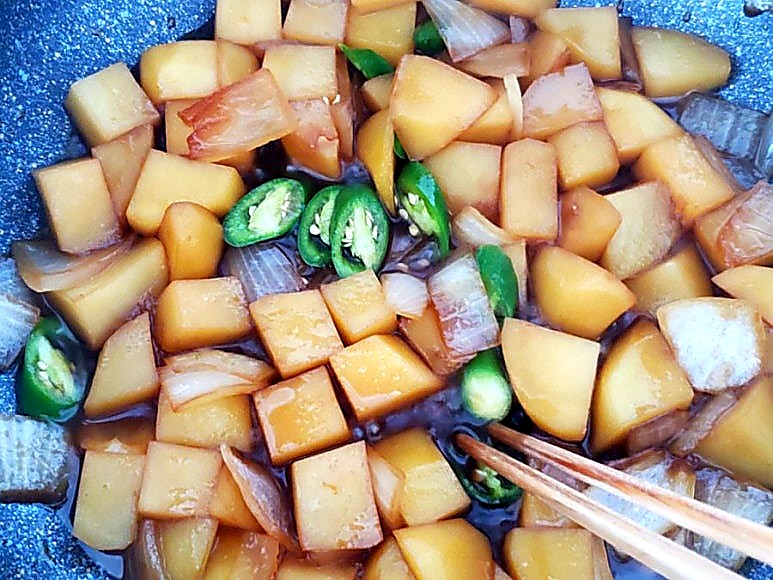
Process 06: Final Garnishing - Dressing with toasted sesame seeds and sesame oil to complete the aromatic build.
The Finale: The Sweet Starch — Glazed, Pillowy Gamja Jorim Chunks Sprinkled with Toasted Sesame Seeds
Ready to Braise?
Learn the precise timing for the initial pan fry, the soy sauce reductions, and the rice syrup timing to make glossy, flawless braised potatoes.
Get the Recipe →