
Lamesa Kitchen
May 17, 2026
“Cold osmosis instead of fire. Three agonizing days of waiting. In the deep soy lacquer, fresh raw crab transforms into molten gold.”
The Soul: The Rice Thief
“Ganjang Gejang is an exercise in profound patience and culinary restraint. The crab is never subjected to the harshness of heat. Instead, it is submerged in a cold, deeply aromatic soy marinade and left to slowly cure for three agonizingly long days. The resulting texture is simultaneously silky, vibrantly briny, and astonishingly rich—it is widely considered the highest possible compliment to a bowl of freshly steamed white rice.”
Among the massive catalog of traditional Korean delicacies, Ganjang Gejang holds a legendary, highly revered status. While most protein transformations utilize roaring fires or bubbling pots, this recipe bypasses heat completely. The raw crab undergoes a gentle curing process that yields a magnificent, buttery texture completely unique to Korean cuisine.
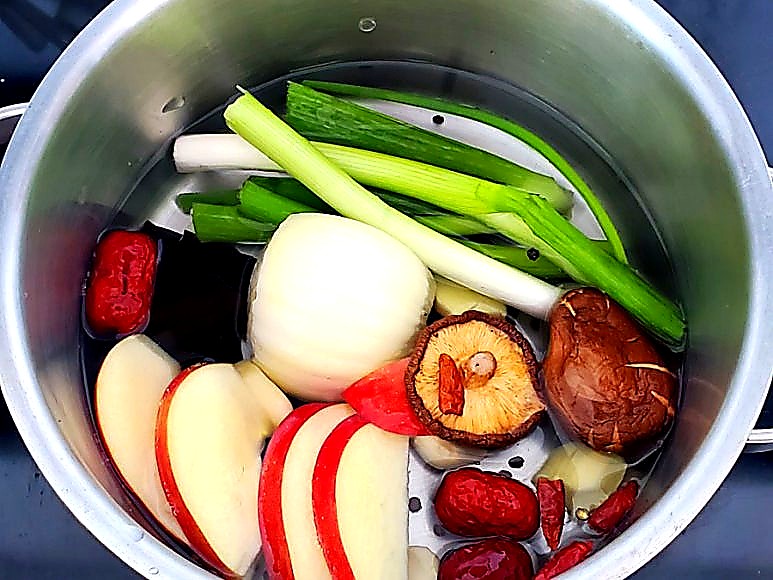
Process 01: The Stock Base - Preparing aromatics including apples, onions, jujubes, and shiitake mushrooms to create a naturally sweet and deep broth.
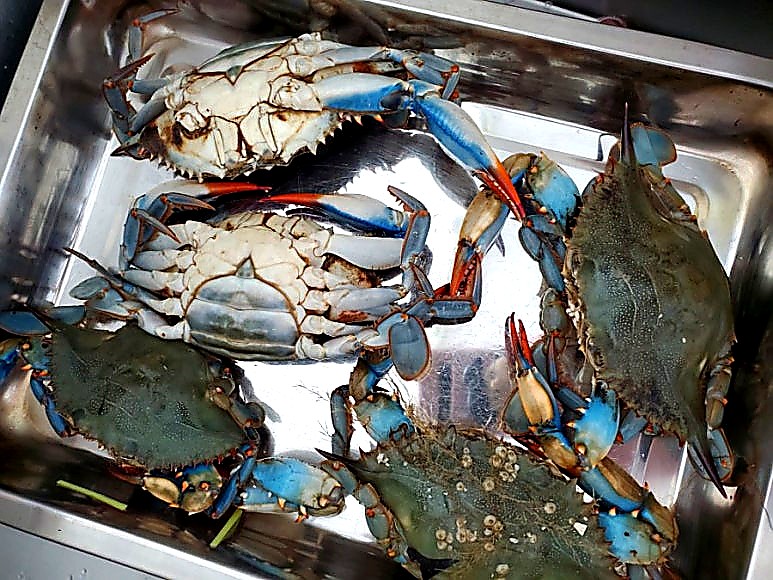
Process 02: The Main Ingredient - Selecting fresh, lively blue crabs, known for their sweet flesh and rich roe.
Cultural Heritage: Bap-Dodoek Legend
“‘Bap-Dodoek’ (The Thief of Rice) is the highest praise a dish can receive in Korea. It denotes a dish so overwhelmingly savory and delicious that you find yourself reaching for a second or third bowl of rice without even realizing it. Ganjang Gejang is the undisputed, universally recognized king of this category, a legendary delicacy that historically graced royal banquet tables and continues to define the pinnacle of the Korean palate.”
The heritage of Gejang dates back to the Joseon Dynasty, where it was served at royal court feasts. It was a preservation method that celebrated the clean maritime bounty of the Yellow Sea. The exquisite tradition of mixing warm, freshly steamed white rice directly inside the crab's orange-lacquered carapace is a gastronomic ritual passed down through generations.
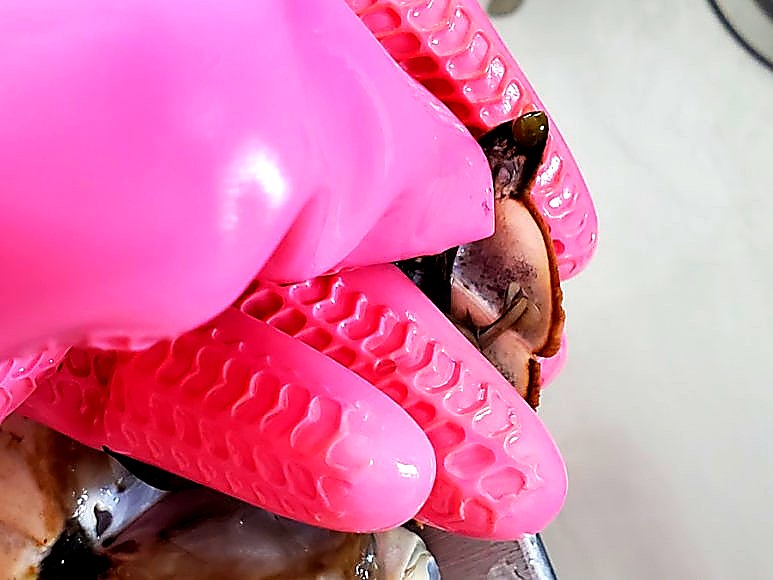
Process 03: Thorough Scrubbing - Using a brush to meticulously clean every crevice of the crab under cold running water.
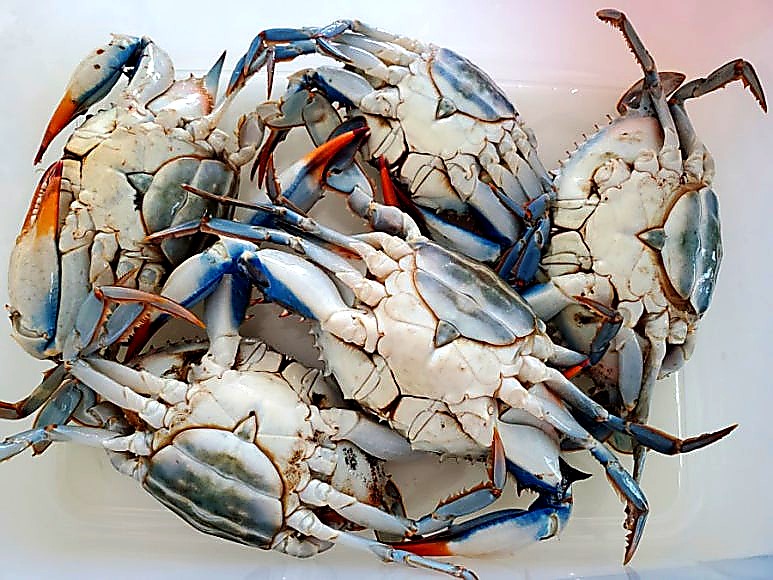
Process 04: Proper Positioning - Arranging the cleaned crabs belly-up in a container to prevent the precious tomalley and roe from spilling out during marination.
Science of Taste: Cold Osmosis Curing
“The magic lies in ‘Cold Osmosis’. The high salt concentration in the premium soy brine slowly and gently denatures the complex proteins of the raw crab meat, ‘cooking’ it without heat. Simultaneously, the extracts from ginger, jujube, and apple penetrate the flesh, neutralizing any fishiness and infusing it with subtle sweetness, all without damaging the delicate, melt-in-your-mouth cellular structure of the raw crab.”
Without the cell-shredding expansion of heat, the crab meat retains its elastic, translucent integrity. The soy brine acts as an osmotic pump, pulling out volatile water molecules while exchanging them with rich, glutamate-heavy soy molecules. The resulting flesh is clean, incredibly sweet, and perfectly preserved.
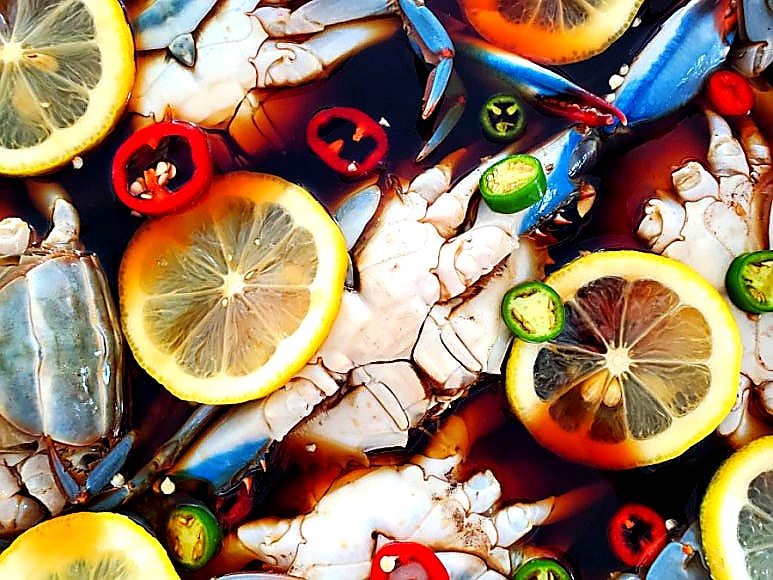
Process 05: The Brine Infusion - Pouring the cooled, umami-rich soy sauce broth over the crabs, garnished with lemon slices and fresh chili peppers for brightness.
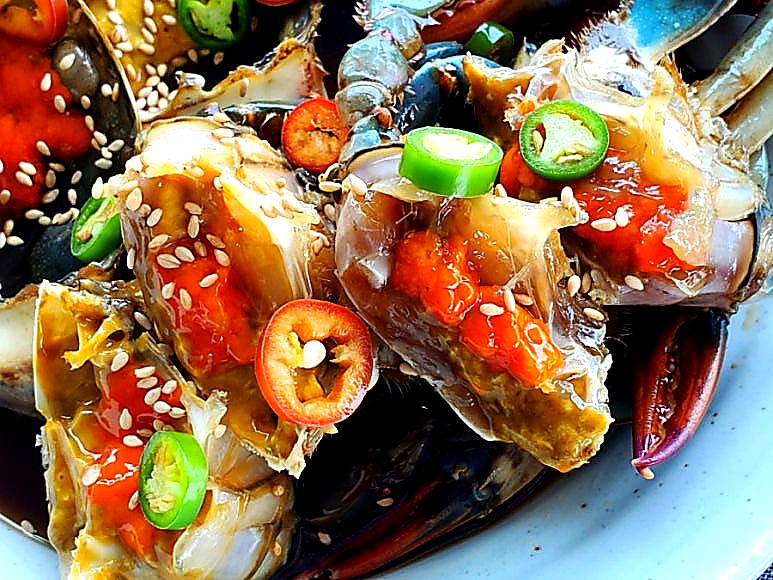
Process 06: The Maturation - After days of cold marination, the crab shell is opened to reveal the perfectly cured, intensely flavorful flesh.
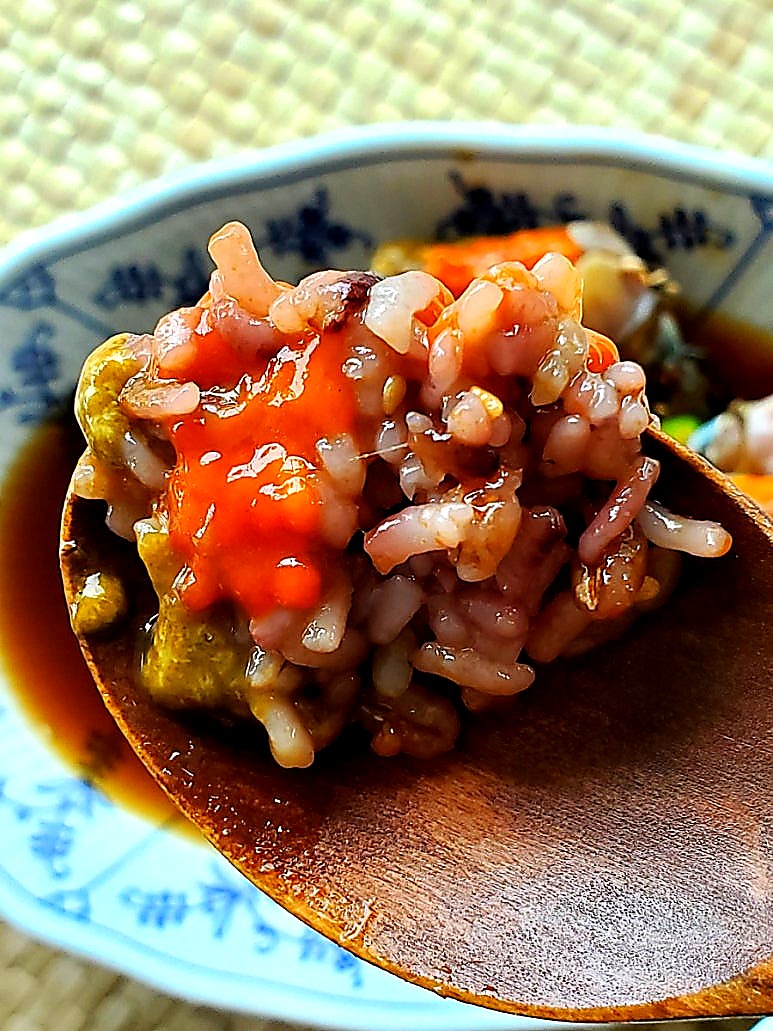
The Finale: The Rice Thief — Translucent Crab Meat Mixed with Orange Roe and Soy Lacquer
Ready to Cure?
Learn the precise brine recipe, the cleaning steps, and the exact three-day curing timeline to master this legendary delicacy at home.
Get the Recipe →